







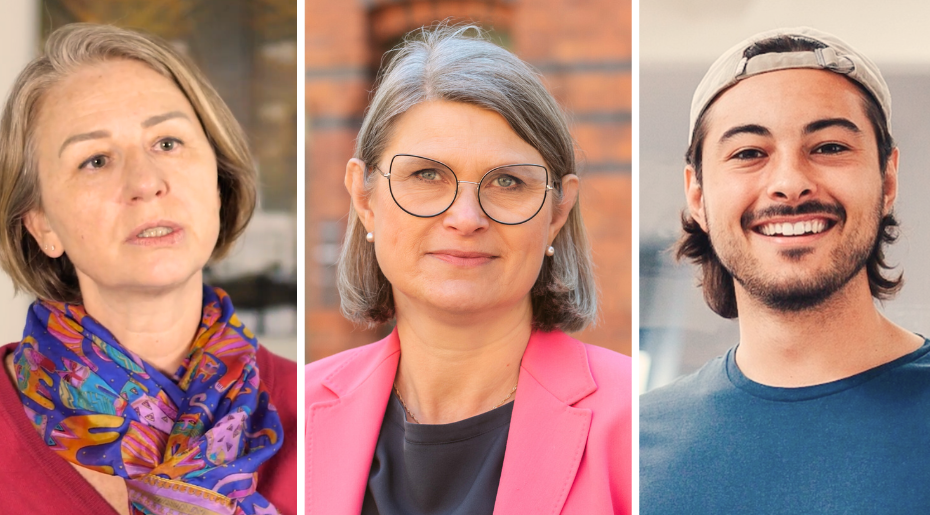
The discussion, moderated by Jessica Martinsson, CEO of SwedenBIO, the Swedish Biotech Association, brought together perspectives from the investment side and the entrepreneurial front line: Dana Burduja of the European Investment Bank and Raffael Wohlgensinger, founder and CEO of Formo, a German biotech.
“Financing alone cannot solve every challenge”
The European Investment Bank plays a central role in Europe’s biotech funding ecosystem. Its mandate is not to replace private investors but to reduce risk and attract them. As Burduja explained, the bank primarily provides venture debt, a financing tool designed for innovative companies that have already raised equity. “We typically finance around 50% of a project and enter between capital rounds. The idea is to catalyze other investors rather than replace them”, she explained.
This model allows startups to secure capital without diluting ownership while signaling credibility to the market. The bank has increasingly expanded its biotech investments under initiatives such as the EU’s upcoming biotech platform, which aims to mobilize billions of euros in additional capital. But even with these tools, financing alone cannot solve every challenge. “For many threats facing biotech companies, financing is not the solution,” Burduja noted. “Regulation, reimbursement systems, and healthcare spending pressures are systemic issues.”
From the company perspective, fundraising is a long and evolving process. Raffael Wohlgensinger founded Formo in 2018 to produce animal-free dairy proteins through fermentation. The company engineers microorganisms to produce milk proteins such as casein without using cows, aiming to build a more sustainable food system.
Since its founding, Formo has raised more than €100 million in equity financing, moving through several funding rounds from seed to Series B. Yet according to Wohlgensinger, each stage of fundraising presents different challenges. “Every round is different. Early on, the question is whether the science works. Later, investors want to see market traction, contracts, and commercialization.”
“We need to be more bullish, bolder, and faster”
Despite Europe’s strengths in research, many biotech companies still move abroad during later stages of growth. Burduja acknowledged this structural issue. “Europe remains a global leader in fundamental research,” she said. “But the challenge often comes in the development and scale-up phases.”
One reason is regulatory fragmentation. Although the EU operates as a single market, national differences remain in areas such as pricing and reimbursement. As a result, companies sometimes find it easier to scale in larger, more unified markets such as the United States.
One of the most candid moments of the discussion came when the panel addressed Europe’s risk appetite. Wohlgensinger argued that Europe tends to focus too heavily on avoiding failure rather than backing bold bets. “The mindset in Europe is often that we prefer not to lose big bets rather than making big bets.”
In venture capital, however, success follows a power-law dynamic where a small number of companies generate most of the returns. “We need to be more bullish, bolder, and faster. Let the ‘walking dead’ companies die and focus on the ones that can compete globally”, he argued.
Public institutions like the European Investment Bank face additional constraints because they manage taxpayer-backed capital. Still, Burduja emphasized that risk is an accepted part of innovation finance. “Through our guarantees with the European Commission, we can fail together with projects that do not succeed. That is part of the model.”
For Wohlgensinger, the issue extends beyond financing institutions. Europe’s entire innovation ecosystem, from universities to regulations, moves more slowly than competing regions. “When I talk about speed and boldness, I mean the entire ecosystem needs to become faster and more ambitious.”
Without these changes, he warned, some strategic industries may already be lost to global competitors. When asked to name the single most important reform for Europe’s biotech ecosystem, both speakers gave the same answer: Europe needs a true single market for capital. Burduja highlighted the importance of building a full Capital Markets Union, allowing financing to flow freely across the continent. “Every step toward a unified capital market is a major improvement.”
Wohlgensinger agreed, but added a broader strategic dimension. “Europe needs to become independent in its thinking and ensure it owns the key technologies of the future.”
Without that shift, he warned, the continent risks falling behind in industries that will shape the coming decades.
